Technology
What actually remains of the smart home
After a decade of voice assistants, colour-changing bulbs, and hubs that needed other hubs, the surviving devices are the dull ones: thermostats, locks, and a light you can turn off from the sofa. The rest was a rehearsal.
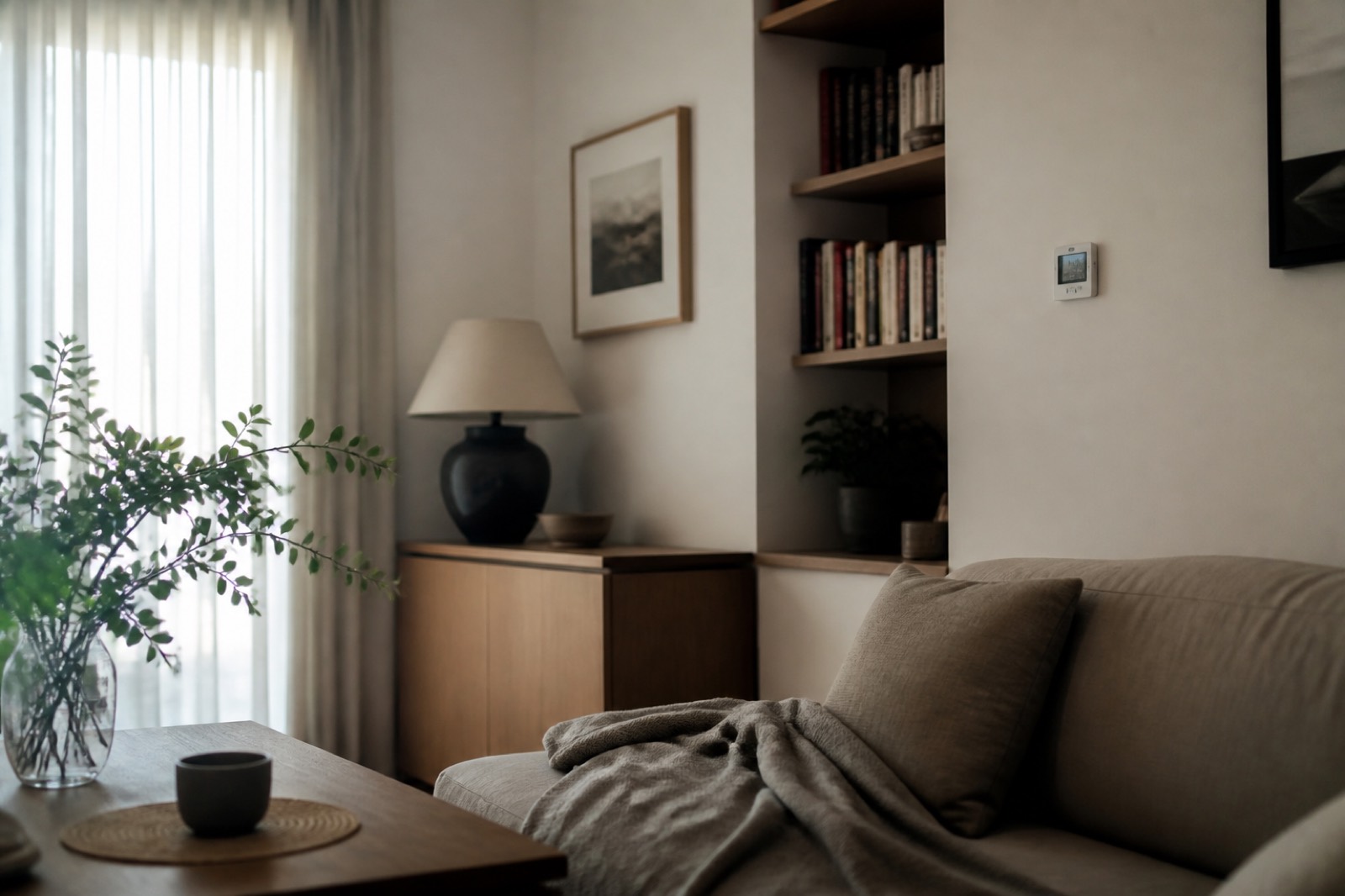
The smart home was sold as a lifestyle. It arrived as a pile of apps. Lights that needed an account. A kettle that wanted a firmware update. A speaker that listened for a wake word and then, as later reporting showed, sometimes for more than that. Households tried the experiment in good faith. A smaller number still live inside a working version of it. The rest unplugged the novelty and kept two or three things that earned their keep.
Those surviving things are predictable. A thermostat that learns a schedule, or at least can be set from work when a trip home is delayed, is useful in a draughty house. A lock that issues a code to a cleaner and revokes it on Friday is useful in a city. A single lamp on a timer, for the appearance of occupancy, is older than Wi-Fi and still works. Colour-changing ceiling washes, fridge cameras, and talking mirrors were answers to questions nobody had asked in their own kitchen.
Interoperability was the real product, and it never quite shipped
The industry knew the problem. Every brand wanted to be the front door. Matter, Thread, and a sequence of earlier alliances were attempts to let a bulb from one company answer a switch from another. Progress is real and slow. Setup still fails in ways that require a forum, a factory reset, and a mood. People who enjoy that process built elaborate systems. People who wanted a house built a smaller one, or none.
Voice control followed a similar arc. It is handy with wet hands. It is also a poor interface for anything with more than two states, and it pushed microphones into rooms where guests had not agreed to be recorded. Many households now leave the speaker in the kitchen and treat it as a radio that can set a timer. That is not a failure of imagination. It is a reasonable boundary.
Privacy, accounts, and the house that phones home
A lock that only works while a vendor’s servers are up is not a lock in the old sense. It is a subscription with a deadbolt attached. Outages have been brief and rare for the large names, and they are still a category error: the front door should not have a status page. Local control — a device that keeps working on the home network if the wider internet does not — is the feature serious buyers now look for, even if the packaging still emphasises the app.
Data practices vary. A camera pointed at a driveway is a security tool and a potential archive of neighbours. Cloud storage is convenient and is someone else’s computer. The households that still use cameras tend to have a reason (parcels, a shared entrance) and a retention setting they have actually opened. The households that do not have decided the footage was not worth the account.
A smaller definition of “smart”
Abandoned apps are the other hangover. A bulb whose manufacturer folded, or simply stopped updating a login page, becomes an ordinary bulb only if it still has a physical switch. Many do not. That is a useful test at the point of purchase: if the company disappeared tomorrow, would the object still do its one job? If the answer is no, it is not a household tool. It is a dependency.
If the phrase survives, it will mean something quieter: a few devices that reduce a repeated annoyance, speak a common protocol, and can be replaced without rebuilding the house. That is closer to electrification in the 1920s than to a film set. It is also closer to how people already live. They did not reject technology. They rejected theatre. The smart home that remains is the one you stop noticing, which was never going to look good in a keynote, and is the only version that deserved to last.