News
How cities are treating street trees as infrastructure
Heat, drought, and tight maintenance budgets are forcing a quieter shift: trees are no longer decoration along the curb. They are being planned, funded, and argued over like drains and streetlights.
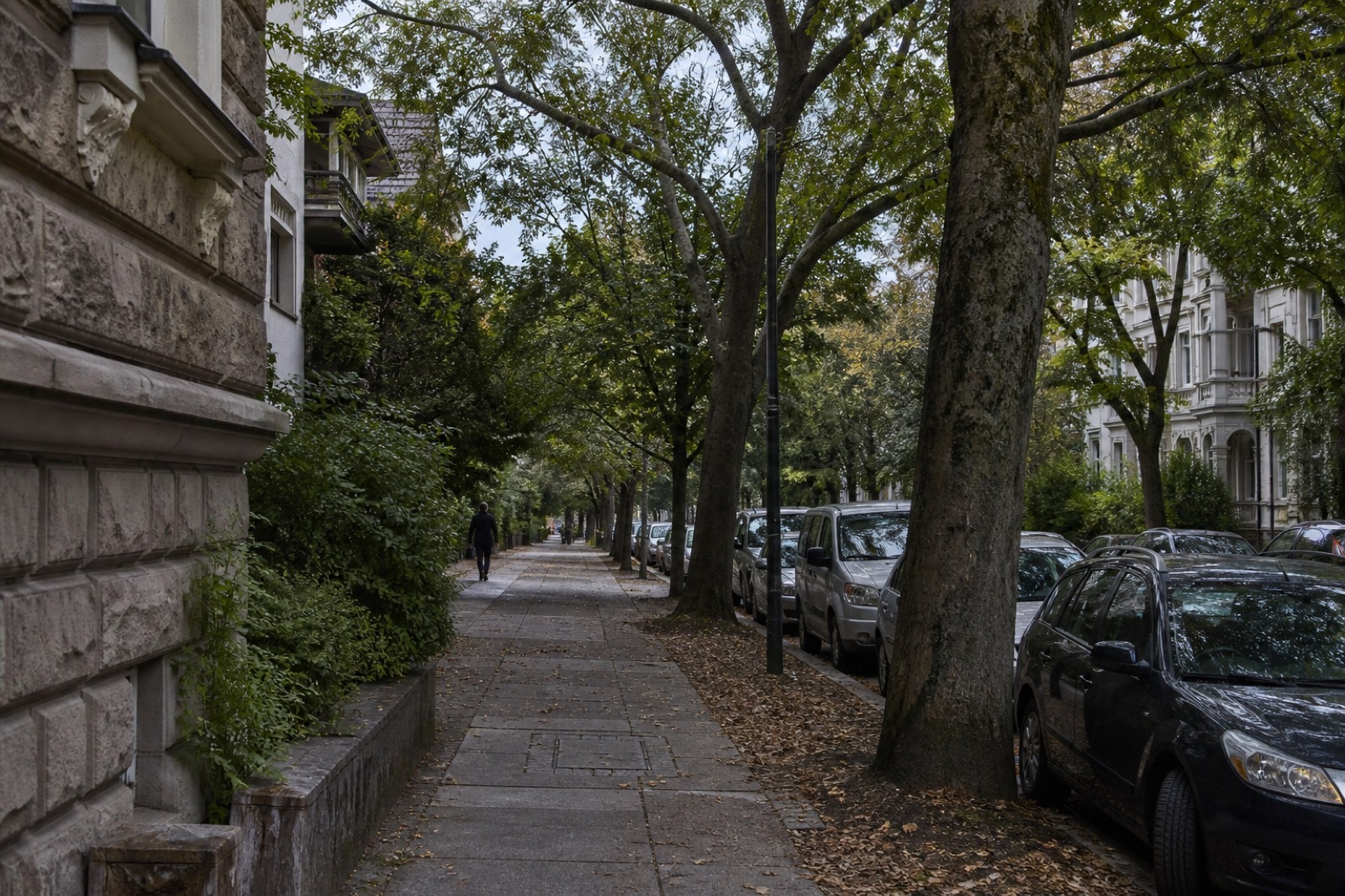
For most of the last century, a street tree was a civic courtesy. A city planted one if the budget allowed, replaced it if a storm took it down, and otherwise left it to the parks department. That attitude is becoming expensive to keep. In summers that now routinely break local temperature records, a mature canopy is one of the few pieces of public equipment that lowers street-level heat without drawing power.
Urban foresters have said this for years. What has changed is who else is in the room. Transport agencies worry about buckling tarmac. Public-health officials track heat-related emergency calls. Insurers, more quietly, have begun to ask how shade and stormwater uptake affect claims. The result is a bureaucratic reclassification that sounds dull and is not: trees are moving from “amenity” to “infrastructure.”
What the shift actually means
Infrastructure, in a city budget, is something you inventory, inspect, and replace on a cycle. Benches do not get that treatment. Water mains do. When a city starts mapping every curb-side tree with a species, age estimate, and condition score, it is admitting that the loss of a forty-year-old plane tree is not a landscaping inconvenience. It is the loss of a working asset that cannot be swapped for a sapling and called even.
Several North American and European cities now attach a replacement value to large specimens — not a nursery price, but an estimate of the shade, rainfall interception, and remaining lifespan being removed. The numbers are imperfect. They are still useful in arguments with utilities that want to cut a crown for a new line, or with developers who treat a planting strip as leftover space.
The harder part is maintenance. A young tree in a narrow pit, surrounded by compacted soil and reflected heat from glass façades, often dies within five years. Cities that still count “trees planted” as a success metric can look busy while the canopy quietly thins. The more serious programmes now report three-year survival rates and the volume of soil actually provided — a less photogenic statistic, and a more honest one.
Species, drought, and the temptation of the exotic
The species list is changing for the same reason. Cities that once lined avenues with a single elegant variety discovered, after Dutch elm disease and later after emerald ash borer, that uniformity is a liability. The current fashion is diversity: a mix of drought-tolerant natives and well-tested introductions, chosen less for autumn colour than for how they behave in a two-week heatwave with no watering truck available.
That creates its own disputes. Residents often prefer the familiar silhouette. Foresters prefer the tree that will still be alive in 2040. In some neighbourhoods the argument has become a proxy for other fights about change. A magazine cannot settle those. It can note that a dead ornamental planted for nostalgia is not a heritage feature. It is a gap in the shade.
Who pays, and who sits under the canopy
Canopy is unevenly distributed. Studies in city after city show the same pattern: hotter, poorer streets have fewer large trees, more asphalt, and less political capacity to stop a removal. Treating trees as infrastructure does not automatically fix that. It does make the disparity visible on a map that budget officers already know how to read.
Some cities have started to require that canopy lost on a development site be replaced nearby, not on a suburban campus the public will never use. Others fund “adopt-a-tree” watering in the first summers, which helps if the volunteers last, and does not if they do not. The programmes that seem to hold up are the boring ones: a dedicated crew, a watering schedule in the first three years, and a ban on stuffing a large tree into a pit the size of a suitcase.
None of this is romantic. Street trees drop leaves into gutters, lift pavements, and occasionally fall on cars. The public conversation still treats those nuisances as the whole story. The other story is simpler. On a forty-degree pavement, the difference between a street with a closed canopy and a street without one is not a matter of taste. It is a matter of whether the walk to the shop is tolerable. Cities that plan for that walk as seriously as they plan for traffic lights are not being sentimental. They are catching up with the weather.