News
Why repairing everyday electronics is still harder than it looks
Right-to-repair laws have multiplied. So have glued batteries, serialised parts, and manuals that exist only as a PDF behind a login. The political argument is moving. The workbench is still a difficult place.
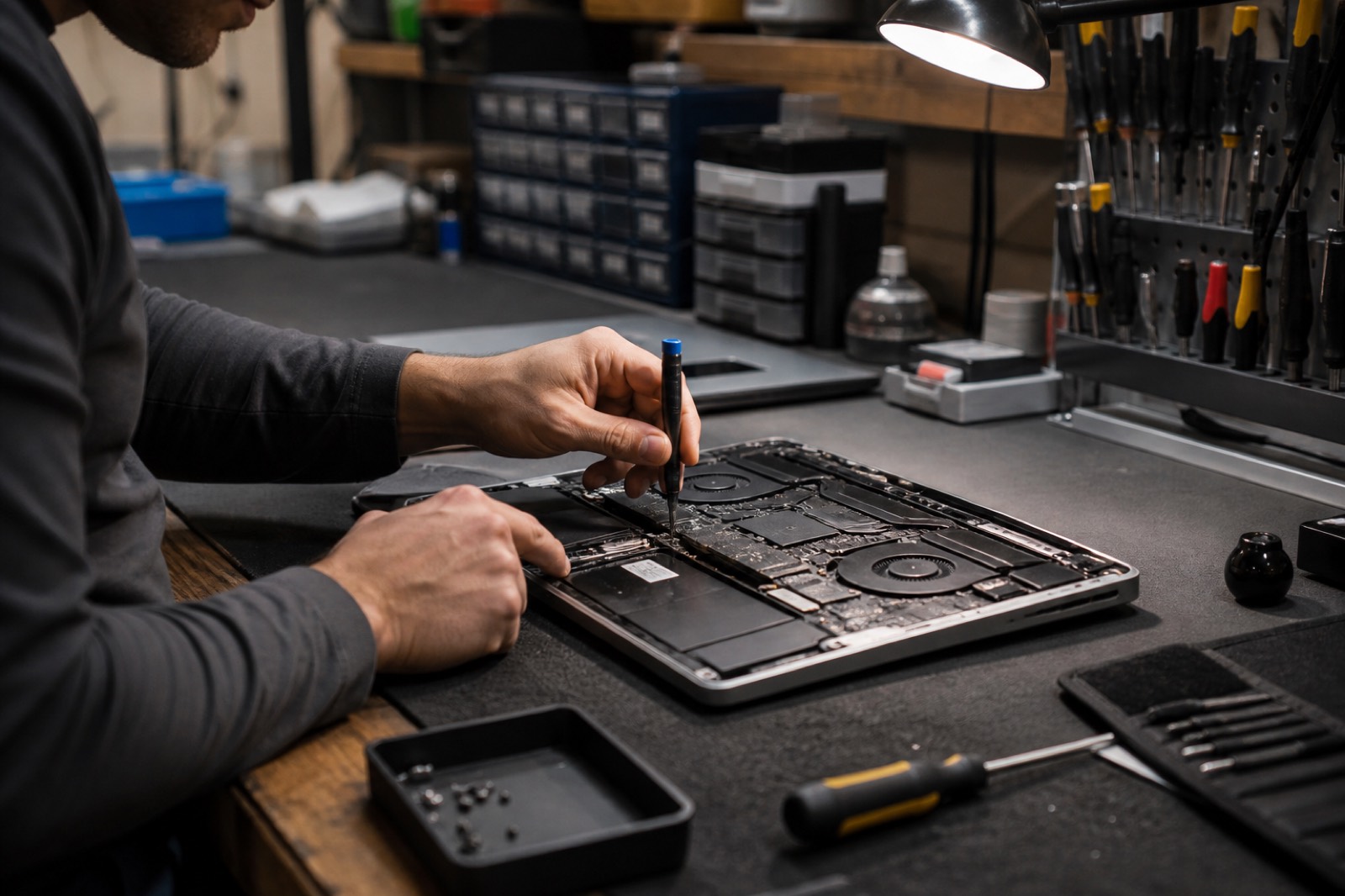
A decade ago, repairing a phone or a laptop was framed as a hobbyist’s complaint. Manufacturers said safety and IP protection required sealed designs; independent shops said that was a way of capturing the aftermarket. Legislatures in Europe and in several U.S. states have since sided, in pieces, with the shops. The laws require parts, tools, and documentation to be available for a list of products. They are real. They are also slower than a product cycle.
Walk into an independent repair counter with a three-year-old laptop and you will still hear a familiar inventory of obstacles. The battery is glued. A replacement screen needs a pairing dance the vendor documents poorly. A screw is hidden under a rubber foot that never survives removal. None of this is accidental in the sense of being unforeseen. It is the residue of a design process that treats service as a cost centre and thinness as a marketing line.
What the laws change, and what they do not
Availability of parts is the largest practical win. When a manufacturer must sell a battery to independent shops at a non-punitive price, the economics of a £60 repair stop collapsing into a £400 replacement. Documentation helps the shops that can use it; it does not create technicians. Serialised parts — components that refuse to work until a server blesses them — remain a live fight, because a law that says “parts must be available” is weaker if the part is inert without a handshake.
Consumer behaviour is the other half. People have been trained to expect sealed slabs and same-week replacements under warranty. A repair takes time, a backup, and the risk that the shop will find a second fault. In a culture of cheap devices, that friction feels like an insult. In a culture of expensive devices, it is still easier to put the old one in a drawer. Drawers are now among the largest e-waste warehouses in private hands.
Design is politics with a screwdriver
Engineers can make a battery replaceable. They have done it for cameras, power tools, and the laptops of an earlier decade. They can also make a device that survives a drop and a spill, which sometimes argues for more adhesive, not less. The honest design brief would admit the trade-off in the spec sheet: this model is thinner; this model is serviceable. Markets rarely present that choice clearly, because the serviceable model looks worse in a photograph.
Community repair cafés fill a gap the market does not love: kettles, lamps, toys, the small appliances that are not worth a shop’s labour rate. They depend on volunteers and on parts that still exist. They cannot desolder a vanishingly small chip. They can teach people that a loose wire is not a reason to throw away a fan. That education is slow and local and does more for waste than another round of corporate recycling bags.
A modest standard of respect
Repair will not return to a 1990s ideal in which every home had a drawer of bits and a confidence they would fit. Devices are denser. Skills have specialised. What a serious policy can demand is narrower and still worth having: fasteners you can open, batteries you can buy, software that does not brick a genuine part, and a spare-parts catalogue that lasts as long as the product is advertised to. That is not nostalgia. It is a rule about objects we are expected to live with for years. Until it is ordinary, the workbench will remain a place where good intentions meet glue.